

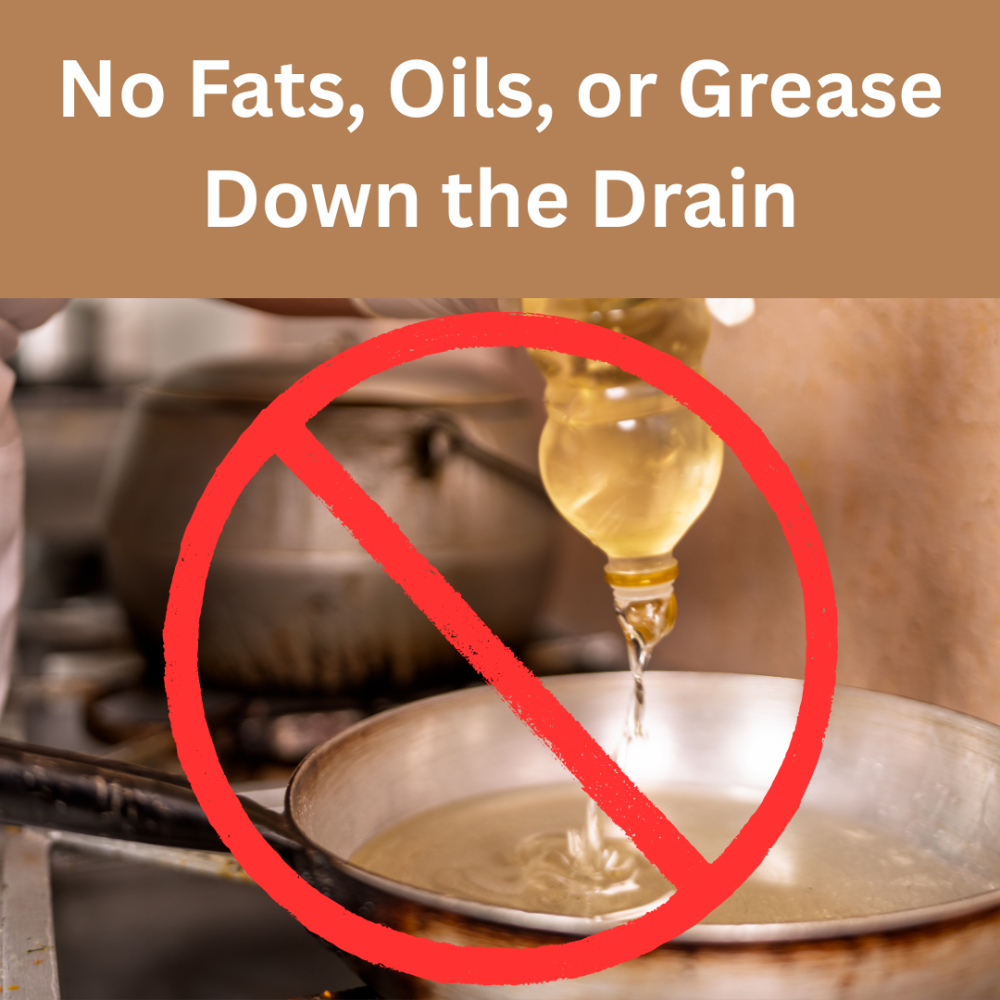
You may already be thinking about all that food you will be making this holiday season, but we want to remind you to keep fats, oils and greases out of the kitchen drain and our wastewater system. These items can lead to blockages in sewer lines or pollution to our creeks, wetlands and the ocean.
Fats, oils, and greases are a byproduct of cooking and are found in such things as meat fats, cooking oil, lard, and shortening, butter and margarine. When grease is washed down the drain, it sticks to the inside of sewer pipes (both on your property and in the streets.) Over time, it builds up and can block an entire pipe.
Garbage disposals do not keep grease out of the pipes, they only shred it into smaller pieces. Commercial additives, including detergents that claim to dissolve grease, may pass it down the line and cause problems away from the source. But the results of a grease-blocked sewer pipe can be sewage overflows in your home or neighborhood resulting in expensive and unpleasant cleanups; possible exposure with disease-causing organisms; or an increase in maintenance costs.
How to dispose of your fats, oils, and greases (FOG):
- Pour FOG into a covered disposable container—such as glass, plastic or a sturdy plastic bag. Store it in the freezer and then put it in the trash after it has hardened.
- Use paper towels to wipe greasy dishes before washing. Put the paper towels in the trash.
- Use sink strainers to catch food waste.
- Put food scraps in a compost bin or in the trash.
- FOG waste should only be put in the trash.
Thanks to Goleta West Sanitary District for this info. Learn more at https://goletawest.org/customer-information/environmental-programs.