

Update from Charis van der Heide, Senior Biologist with Althouse and Meade, Inc.
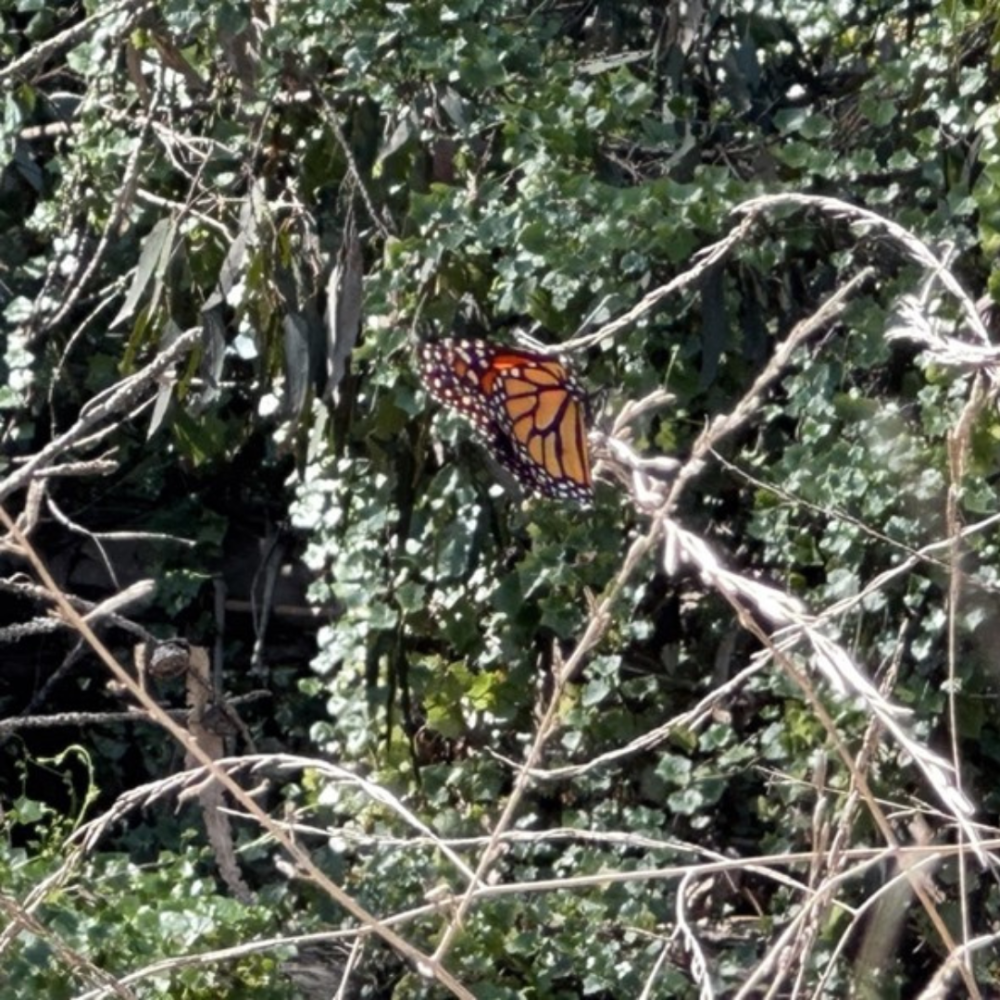
The numbers are in and unfortunately this is a very low population year for monarch butterflies across California. Like last year, the number of overwintering monarchs is much lower than the 10-year average. We know there is higher mortality of overwintering monarch butterflies in low population years because they lack the safety in numbers strategy. Additionally, we know there is higher mortality after heavy storms, which we just experienced for several days. All these factors come together for our total monarch count at Ellwood Mesa to be 2 butterflies.
In low population years, we notice that monarchs tend to spread out across large overwintering habitats like Ellwood Mesa. Monarch butterflies can use visual cues from other roosting monarchs to locate roosting areas. When there are few monarchs roosting, this behavior of following the leader can break down and individual monarchs are on their own to find good places to roost. This means that our focused monarch surveys at Ellwood Mesa (which follow the Xerces Society count methodology) could miss a few monarchs (but not likely more than a handful) if they roost outside of our known overwintering locations.
All in all, while the low numbers this year are very sad to witness, we can find hope that the western population was able to rebound after the historically low numbers of 2020 and there is the possibility that they will rebound next season.
You can plant winter-flowering nectar plants to help sustain them through the winter and native milkweed in the spring to foster their breeding season.
When you visit Ellwood Mesa, keep a look out for our tagged monarchs with the Project Monarch app and it is always a treasure to see even one monarch’s bright wings fluttering by in the forest.